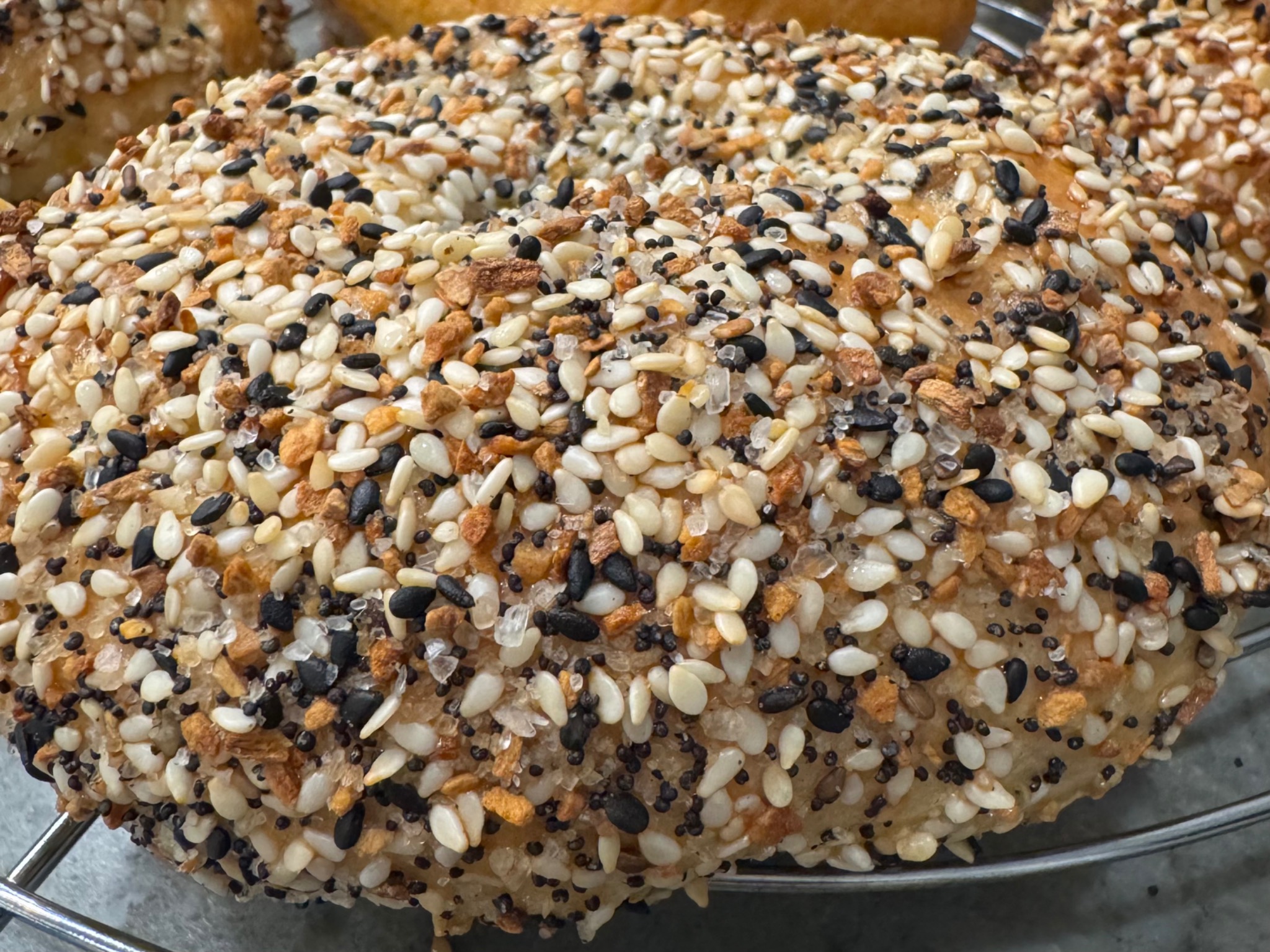
At Greg’s Pizza & Bagel Joint, I’m interested in the whole bite: a browned exterior, a satisfying chew, and an inside you want to eat again. The boil is one part of that result, alongside flour, mixing, fermentation, shaping, and baking.
If you’ve watched bagels go from the dough tray into a pot of water and wondered why, here’s what that step is doing.
What changes in the water?
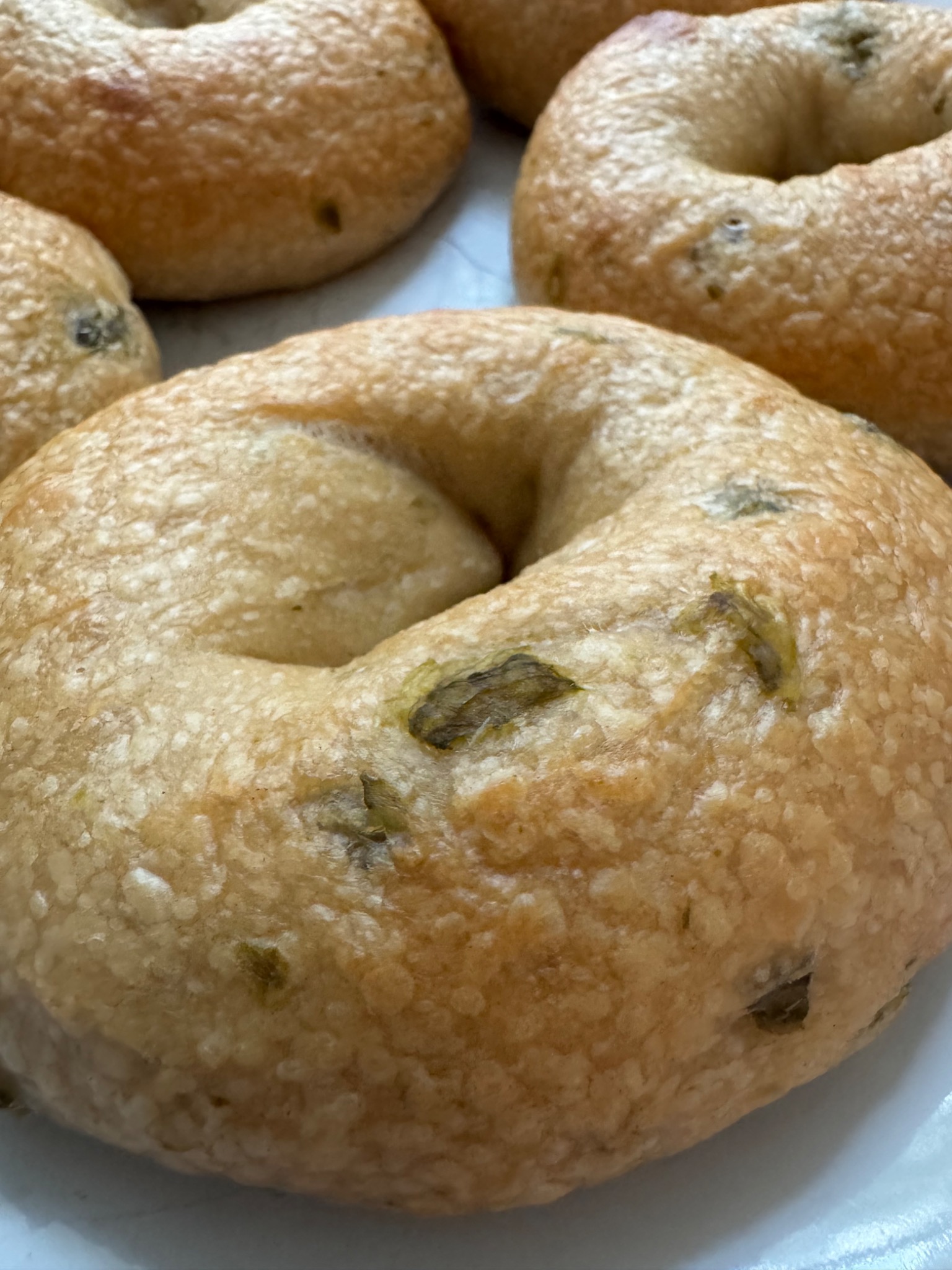
The hot water begins setting the outside before the bagel reaches the oven. A more firmly set surface limits how freely it can expand in the bake. This is why changing the boil can change the crust and texture, even when you use the same dough.
King Arthur’s test kitchen explains that a shorter boil allows more expansion and a thinner crust, while a longer boil can produce a chewier result. Those adjustments are discussed in its bagel-baking tips.
Think of boiling as a texture-setting stage. It does not finish cooking the bagel, and it does not replace good dough development.
The boil is only part of the chew
Flour and mixing build the dough’s structure before it reaches the pot. King Arthur’s shaping guide explains the role of kneading and gluten development in bagel texture. A longer boil cannot make up for every problem earlier in the process.
I use King Arthur Organic Bread Flour for my bagels. If you’re choosing flour for your own recipe, the Ingredient Library is a useful starting point. Match the flour to the recipe rather than choosing solely by the largest protein number on a label.
The Pizza & Bagel Glossary can also help with terms such as gluten, proofing, and crumb as you compare instructions.
How long should you boil bagels?
Use the timing in the recipe you’re making. Different formulas and styles use different water baths. These published examples show why there is no universal timer setting:
| Published recipe | Its water-bath timing |
|---|---|
| King Arthur Water Bagels | About 30 seconds per side at a gentle simmer. |
| King Arthur Ultimate Sandwich Bagels | 60 seconds per side. |
| King Arthur Bagels | 2 minutes on the first side, then 1 minute on the second. |
These are examples from three separate recipes, not interchangeable steps or Greg’s production timings. Follow one complete method for your first batch. If you later test a different boil, keep the dough, bagel size, proofing, and bake as consistent as possible.
For a larger or smaller batch, use the Bagel Batch Calculator. Scaling ingredients does not automatically change the boil time for each bagel.
Why do some recipes add malt to the water?
Malt contributes flavor, and a sweetened water bath can influence the finished exterior. King Arthur describes using non-diastatic malt in bagel dough and the bath for the characteristic crust. Its Ultimate Sandwich Bagels use barley malt syrup or honey in the water instead.
Read the exact ingredient name. Barley malt syrup, non-diastatic malt powder, and diastatic malt powder do different jobs; they are not automatic spoon-for-spoon substitutes. The malt guide in my Ingredient Library explains the distinctions.
Handle the shaped bagels gently
Have the oven heated and your baking tray ready before you begin. Work in small batches so you have room to turn and lift each bagel with a suitable slotted utensil. Follow your recipe’s simmer or boil instructions rather than letting the water batter the dough.
Bagels that deflate in the bath may have overproofed or been handled roughly. King Arthur’s test-kitchen guidance emphasizes watching proofing and using a gentle touch. Check both before deciding that the recipe simply needs a longer boil.
A scale, timer, wide pot, suitable lifting utensil, and cooling rack each have a clear job here. You can explore my equipment in Greg’s Gear Room.
After boiling: toppings, baking, and cooling
Add toppings using the method in your recipe. Some use an egg wash to help seeds adhere; others use the damp surface after boiling. An egg wash is a separate choice from the water bath. King Arthur’s Water Bagels instructions describe both topping and optional egg-white brushing.
Bake the bagels through, then let them cool on a rack before slicing. The boiling step is not a substitute for the oven. If you want a reference beside you while you work, open the bagel-boiling section of my Free Cheat Sheets.
Can you skip the boil?
For a recipe written for boiled bagels, skipping the bath changes the intended result. Steamed bagels are another method: King Arthur includes a steaming option in its bagel guide. If that’s what you want to make, begin with a recipe designed for steaming.
For the boiled bagels I’m making, the water bath belongs in the process. If you’re troubleshooting your own batch, visit Ask Greg — FAQ and describe what happened before, during, and after the boil. Those details make the next adjustment much more useful.